Symptom checklist: what to look for
Use this checklist to compare your leg bite against typical mosquito bite features. Individual reactions vary — some people swell more, others itch less.
Scan from thigh to ankle on both legs. Tick bites on the leg often occur after walking through brush — check behind the knee and inner thigh.
| Trait | What to look for |
|---|---|
| Shape | Small red bumps or wheals — may resemble other tiny fly bites. |
| Pattern | Often sporadic singles; ankles/arms/legs outdoors. |
| Color | Pink to red; may have a central punctum or pale halo |
| Swelling | Usually localized; wider swelling may suggest allergy |
| Itch vs pain | Commonly high the first days. Pain: Usually mild at moment of bite; may not notice the bite instantly. |
| Timeline | 0–6 hours: Papule appears; itch may escalate.; 24–48 hours: Typically peaks then subsides.; 2–5 days: Most uncomplicated bites fade. |
| Why the leg? | Legs have large surface area and are exposed in shorts, dresses, and sleepwear. Mosquitoes, ticks, chiggers, and fleas all commonly bite legs during outdoor activities and rest. |
Photo comparison: does your bite match?
Mosquito bites on the leg can resemble other insect bites, contact dermatitis, or minor skin infections. Key differentiators include the bite pattern, timing (did it appear after outdoor activity, sleep, or pet contact?), and associated symptoms like itch versus pain.
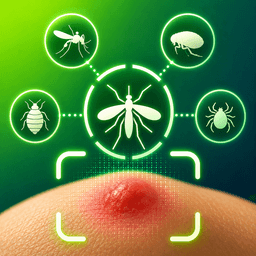
A single clear photo often reveals details you might miss in a mirror — central punctum, clustering pattern, or swelling borders. BiteSight compares your photo against common bite patterns and suggests a likely match with practical next steps.
If the mark appeared after sleeping, consider bed bugs or fleas in addition to mosquitos. If it appeared after hiking or gardening, ticks and chiggers belong on your comparison list.
Red flags: when to see a doctor
Most mosquito bites on the leg resolve without medical treatment. However, certain signs warrant prompt evaluation — especially for any bite that worsens unexpectedly.
- Worsening pain, redness spreading fast, pus, streaking, fever.
- Severe swelling of face/lips suggesting allergy.
- Difficulty breathing, throat tightness, or widespread hives suggesting anaphylaxis.
- Fever developing after endemic mosquito-borne illness travel — evaluate per local guidance.
Home treatment steps
For uncomplicated mosquito bites on the leg, home care focuses on reducing itch, preventing infection, and monitoring for change.
- Cool compress
- Gentle cleansing; discourage scratching
- 1% hydrocortisone sparingly short term
- Oral nonsedating antihistamine — follow label/package insert
- Avoid scratching — it increases infection risk and can prolong healing
- Photograph the bite daily to track size, color, and spreading
What to avoid
Some well-meaning home remedies can delay healing or cause harm.
- High-potency steroid creams unsupervised
Prevention tips
Preventing future mosquito bites on your leg depends on reducing exposure:
- EPA-registered repellents per label directions
- Screens; reduce standing water when feasible
- Covering limbs at peak activity periods
Special considerations for the leg
A spreading rash on the leg days after a tick bite, especially in Lyme-endemic areas, warrants prompt medical evaluation.
According to public health guidance, mosquito bites involve piercing the skin to feed. Reactions range from barely noticeable to significantly itchy or painful depending on your immune response and the specific circumstances of exposure.
Scan from thigh to ankle on both legs. Tick bites on the leg often occur after walking through brush — check behind the knee and inner thigh.
Understanding your body's reaction
Mosquito bites trigger a local inflammatory response. Itching, Localized bump or puffiness are the most frequently reported symptoms. Some people react strongly to their first exposure; others develop increased sensitivity after repeated bites in the same season.
Less common reactions include Larger swollen area, Scratch-related skin breakdown. These do not automatically mean something is seriously wrong, but they warrant closer monitoring and possibly medical advice if they persist or worsen.
Tracking your symptoms with dated photos creates a useful record if you later need to discuss the bite with a healthcare provider — especially important for bites that change appearance over time.
Common identification mistakes
Many people misidentify mosquito bites on the leg because several skin conditions look similar at first glance.
- Assuming every itchy bump is the same insect — fleas, mosquitoes, bed bugs, and contact dermatitis all cause red bumps
- Diagnosing a 'spider bite' without seeing the spider — most spider bites are rare; skin infections are more common
- Ignoring a bite because it doesn't itch immediately — bed bug and tick reactions can be delayed
- Treating with strong steroid creams without medical guidance — can thin skin and mask worsening infection
- Checking only once — mosquito bite appearance evolves over 24–72 hours; recheck and rephotograph
Still not sure? Confirm with a photo scan
If you have read this guide and still cannot confidently match your leg bite to a mosquito, a photo-based identification tool can help. BiteSight compares your bite photo against common patterns for mosquitoes, ticks, spiders, fleas, bed bugs, and other frequent biters.
Upload a clear, well-lit photo showing the full bite area on your leg. The app suggests a likely match along with calm, practical guidance on what to watch for and when to seek care — without replacing professional medical evaluation when you need it.