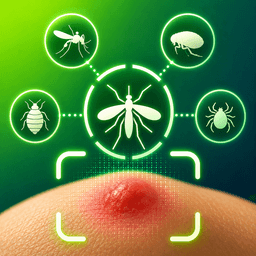
How to use this guide
Start with what you know: where the mark is, whether it itches or hurts, and whether bites appeared alone or in a pattern. Match those clues to the bug profiles below, then open the linked guide or location page for detail.
Photos beat memory. If you are still uncertain after reading, upload a clear image to BiteSight or take the What Bit Me? symptom quiz for a structured walkthrough.
Quick comparison: common biters
Mosquito bites usually appear as isolated itchy bumps on exposed skin after outdoor time — often ankles, arms, and face. They swell within minutes to hours and fade in days.
Flea bites cluster on ankles and lower legs, especially indoors with pets. They itch intensely and often arrive in groups or lines.
Bed bug bites tend to show up overnight on torso, neck, and arms — sometimes in lines or clusters. They may not itch immediately.
Tick bites attach at a single point; you may find the tick still embedded. A bullseye rash days later suggests Lyme evaluation in endemic areas.
Spider bites vary widely — many suspected spider bites are other insects or skin conditions. True bites are often solitary, sometimes painful, with localized redness.
- Mosquito — outdoor, exposed skin, itchy wheal
- Flea — ankles, clusters, pets indoors
- Bed bug — overnight, torso/neck, lines
- Tick — attached crawler, bullseye risk
- Spider — painful, single lesion, uncertain ID
Not sure what bit you?
Upload a bite photo and get a likely match with practical guidance on iPhone or web.
Pattern cheat sheet
Single bump: mosquito, spider, tick (attachment site), or solitary flea bite.
Cluster of small bumps: fleas, midges, chiggers, or multiple mosquito feeds.
Line or zig-zag: classic bed bug feeding pattern; also possible with flea bites on ankles.
Bullseye or expanding ring: think tick-borne illness evaluation — photograph and see a clinician in endemic regions.
Widespread hives: likely allergic reaction or urticaria, not a classic single-insect puncture.
Location on the body
Ankles and feet: fleas, mosquitoes, chiggers.
Scalp and hairline: ticks, lice, mosquitoes.
Torso and sleep-exposed skin: bed bugs, mosquitoes (if window open).
Behind knees, groin, armpits: ticks favor skin folds and elastic waistbands.
Hands and arms: mosquitoes, outdoor biters, occasional spider encounters in storage areas.
Timing: when bites appeared
Minutes after being outdoors: mosquitoes, gnats, horseflies.
Hours later: fleas, delayed mosquito reactions in sensitized people.
Overnight while sleeping: bed bugs primary concern; also mosquitoes if windows open.
Days after exposure: tick-borne rashes; some allergic patterns evolve slowly.
When it might not be a bite at all
Hives, eczema, ringworm, contact dermatitis, and staph infections mimic bites. If pattern does not fit any insect profile, use the Bite or Something Else? quiz or see a clinician.
Next steps by confidence level
High confidence: open the bug-specific guide below for treatment and prevention, or confirm with a photo scan.
Low confidence: compare look-alikes on our comparison pages, inspect environment (mattress, pets, yard), and track changes with dated photos.